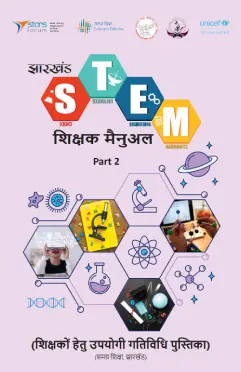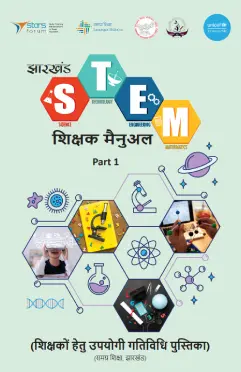
science is the systematic study of nature and should not be learned solely through textbooks but through observation, inquiry, and practical experiences. It emphasizes the importance of STEM education—Science, Technology, Engineering, and Mathematics—in developing critical thinking, problem-solving abilities, and a scientific mindset among students. This STEM manual is designed to connect classroom learning with real-life applications through hands-on activities such as building scientific models, conducting experiments, understanding microorganisms and food preservation, testing soil and water, exploring mathematical concepts, and learning basic technological applications like electrical circuits, solar devices, and microcontrollers. The manual also encourages students to interact with local professionals, conduct surveys, and participate in field visits to gain practical exposure to various skills and professions. It promotes collaborative learning, equal participation of boys and girls, and the development of creativity, communication skills, and analytical thinking.